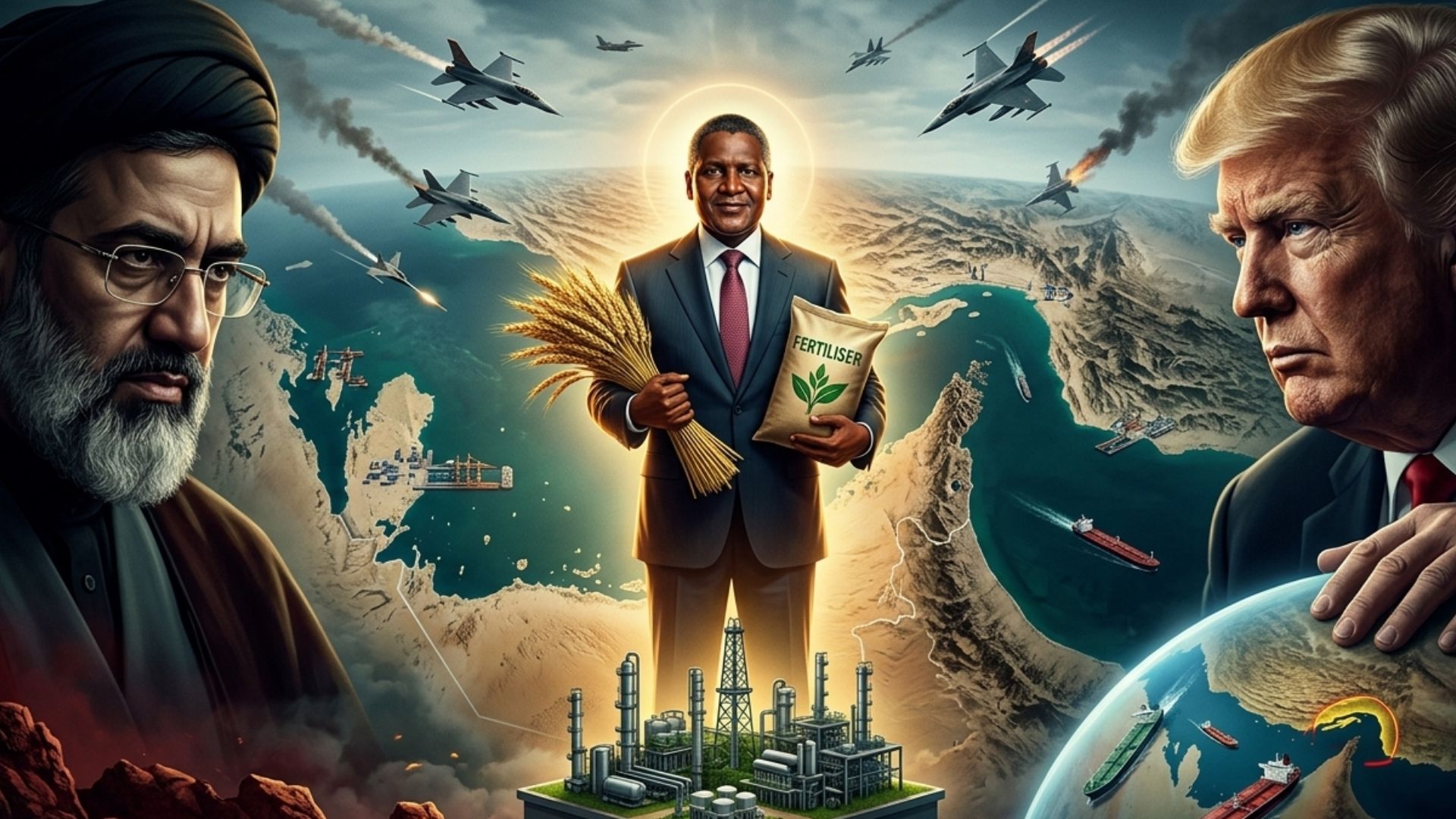
Right now, thousands of miles away from Nigeria, the Strait of Hormuz is effectively a car park for cargo ships. With tensions between the US, Israel, and Iran at a breaking point, the flow of ammonia and urea, the lifeblood of global fertiliser has slowed to a trickle. This article will take only few minutes of your time, stay with me.
You see, before the Monday Markets in Maiduguri open or the banks in Abuja process their first transaction, the fate of the Nigerian economy is decided on the dusty farmland of the Middle Belt. Today, that soil is at the centre of a quiet crisis. The price of a standard 50kg bag of fertiliser is expected to skyrocket this summer. To the layman, it might just look like a farming input. But in reality, the cost of this vital commodity is the first domino in a chain reaction that threatens to reshape the country.
The naval blockade in the Middle East might feel like a "foreign desk" news story. But for the Nigerian economy, it is a direct hit. When the supply of fertiliser stops at the Gulf, the cost of living explodes at home. Let's look at how a simple bag of fertiliser connects to conflict, inflation, and the very stability of our communities.
The Domino Effect: A Map of the Crisis
If you were to draw a mental map of Nigeria right now, you could trace a direct line from the rising cost of farming inputs in the Middle Belt and North to the hotspots of national insecurity and economic strain. We have to stop looking at farming as just "agriculture" and start seeing it as the foundation of our national security. Here is how that broken supply chain is setting off a chain reaction across Nigeria:
1. The Seeds of Conflict (Farmer-Herder Clashes): Fertiliser isn’t just "food for plants"; it’s a peacekeeper, it will sound like an exaggeration. But, when the price of a bag hits ₦50,000, farmers can’t afford to nourish their land. To get the same harvest, they have to clear more land, often encroaching on "grazing routes". That is to say, when fertiliser becomes too expensive, farmers cannot afford to nourish their existing plots. To get the same amount of food out of the ground, they are forced to clear and cultivate much more land. The result is a deadly and increasing clash between farmers and herders. It is, fundamentally, a battle for space driven by depleted soil.
2. The Harvest of Despair (Banditry and Food Crises): As crop yields drop due to nutrient-starved soil, the supply of food shrinks, and market prices surge. A hungry society is a desperate one. With rural youth facing collapsed local economies and skyrocketing food inflation, many are pushed toward criminality for survival, you cannot call them lazy as even if they try farming it is too expensive. Banditry and kidnapping for ransom are tragic symptoms of an agricultural economy that can no longer sustain its young people.
3. The Extremist’s Opportunity (Terrorism): In the North East, the stakes are even higher. Terrorist organisations like Boko Haram thrive where the state economy fails. When farmers abandon their fields because inputs are unaffordable and the risk of violence is too high, it creates an economic vacuum. Extremist groups exploit this poverty, finding easy recruits among those who can no longer feed their families through honest labour.
4. The Election Year Hunger: As we approach an election year, the stakes of the food crisis multiply. Hunger is easily weaponised. Desperate, food-insecure populations are vulnerable to manipulation. Because of this, we often see vital resources, including government-procured fertiliser hoarded and distributed as political patronage rather than reaching the farmers who actually need it to grow food.
5. The Rising Cost of Living: The burden does not stay on the farm. When the farmer pays more to grow food, the transporter charges more to move it, and the market vendor increases prices to survive. This drives up the broader cost of living. Even though national headline inflation has recently eased to around 15.1%, the reality on the street feels much harsher. Rent, transport, and basic services all adjust upwards when the foundational cost of food breaks the average household's budget.
Turning the Tide: The Solutions
We are not without hope. Reversing this trend requires treating agricultural inputs not just as farming tools, but as a matter of national security.
1. The Dangote Factor: Nigeria is home to the $2.5 billion Dangote Fertiliser plant, boasting a massive capacity of 3 million metric tonnes per annum.
The government and private sector must collaborate to ensure this domestic powerhouse prioritises the local market. Flooding the Nigerian market with locally produced urea can drastically crash prices and end our reliance on volatile imports. 2. Embracing Local Alternatives: We must diversify our soil nutrition. Promoting the use of local, organic compost and domestic blending plants will reduce the shock of global supply chain disruptions. Communities can be taught to turn agricultural and organic waste into rich, affordable fertiliser, keeping costs low and the soil healthy.
3. Shielding Subsidies from Politics: Government subsidies are crucial, but the system needs fixing. We must implement strict, biometric-linked digital wallets (e-wallets) for farmers. Subsidies must go directly to the mobile phones of the rural poor, ensuring the funds are used for seeds and soil, not hijacked for political campaigns.
4. Cooperative Direct Purchasing (A Local Solution): Smallholder farmers are often at the mercy of middlemen who buy fertiliser from the factory and double the price before it reaches the village. By forming officially recognised cooperative societies, farmers can pool their money and purchase directly from massive producers. Bulk purchasing at factory prices cuts out the middleman entirely, keeping the profit in the farmer's pocket.
5. Strategic Sovereign Barter (A Global Solution): On an international level, Nigeria should leverage its natural resources through strategic barter trade. Instead of spending depleting foreign exchange reserves to import the raw materials needed for complex fertilisers (like potassium and phosphate), Nigeria can directly trade its abundant natural gas with countries that have those minerals. This protects our agriculture from the volatility of the US dollar.
The Bottom Line
The numbers don’t lie: a 10% drop in fertiliser availability can lead to a 25% drop in grain yields. In a country of over 200 million people, that isn’t just a statistic—it’s a catastrophe.
The cost of fertiliser is not just an agricultural issue; it is the heartbeat of the Nigerian economy. When a farmer cannot afford to feed the soil, the ripple effects are felt in the cost of a bus ride in Lagos, the safety of a village in the North, and the political stability of Abuja. By protecting the farmer, leveraging our massive industrial facilities, and keeping politics out of the soil, we can rewrite the story of our economy. True national wealth does not start in a bank vault—it starts with a successful harvest.
The war in the Gulf is a wake-up call. We can either remain at the mercy of global shipping lanes, or we can use our own gas, our own refineries, and our own local genius to secure our borders by first securing our plates.